books ON AMAZON NOW!!!!



What Impact360 Is
Impact360 was created because too many organisations are busy changing, yet very little actually changes.
Over the years, I saw the same pattern repeat itself across housing, public services and other people-centred organisations. Strategies were well written. Programmes were launched with energy. New methods, tools and consultants arrived with confidence. And yet, twelve or eighteen months later, the same issues were still sitting on performance reports, frontline teams were more tired than before, and leaders were wondering why progress felt so slow.
The problem was not effort.
It was not intent.
And it was not intelligence.
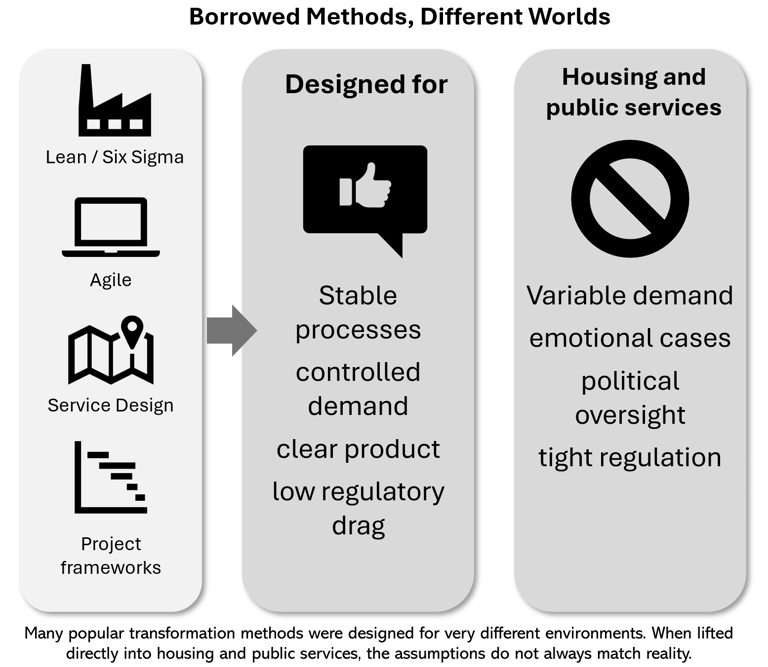
The problem was that most change methods were never designed for the world these organisations actually operate in.
Impact360 exists to close the gap between what organisations say they want to achieve and what really happens day to day.
Impact360 is a service-led transformation system designed specifically for complex, regulated, people-driven organisations.
At its core, it connects strategy, value for money, governance, delivery and capability into a single, joined-up way of working. It is not a one-off programme, a short-term cost exercise or a collection of disconnected tools. It is a way of running change so that improvement becomes repeatable, sustainable and owned by the organisation, not dependent on external support.
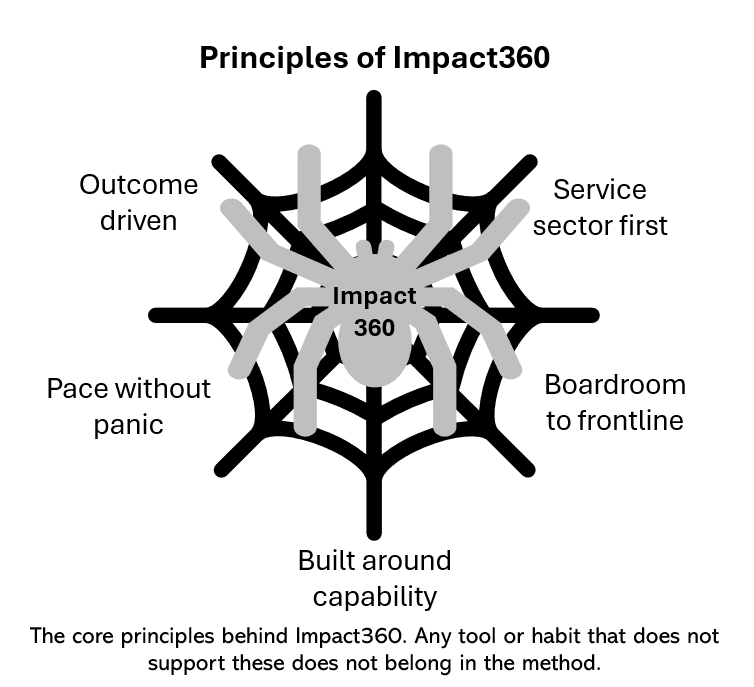
Impact360 works from boardroom to frontline. It helps leaders make clearer strategic choices, helps managers prioritise and sequence work realistically, and helps teams improve services in a way that actually fits the reality they face every day.
Why Impact360 Exists
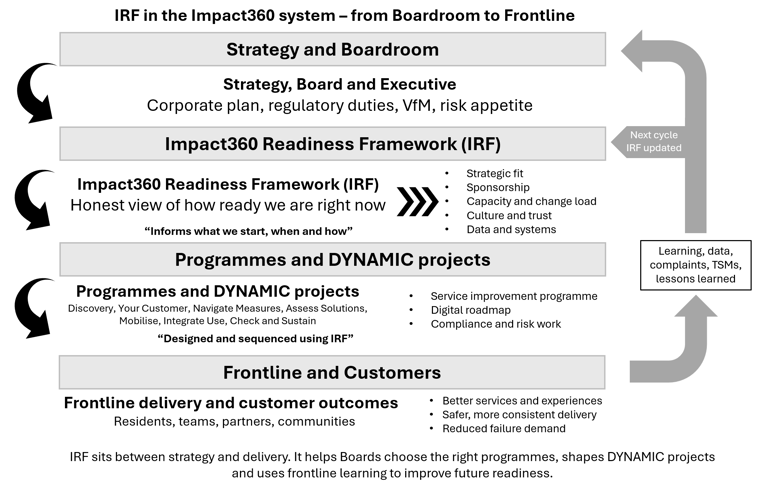
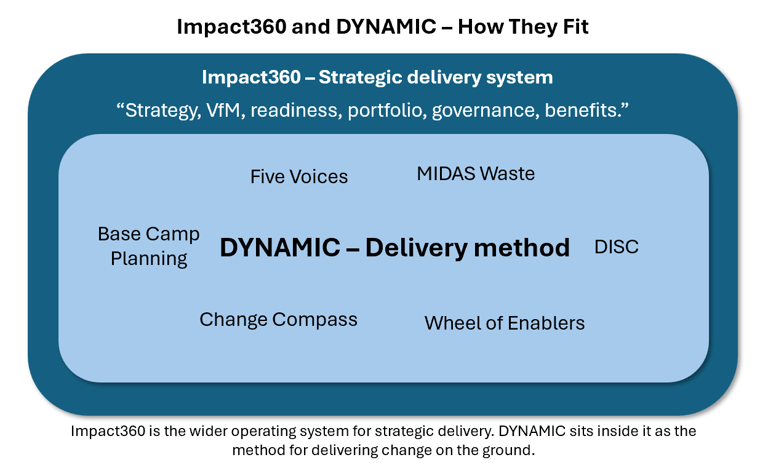
At the heart of Impact360 sits DYNAMIC, a service-first alternative to traditional improvement cycles.
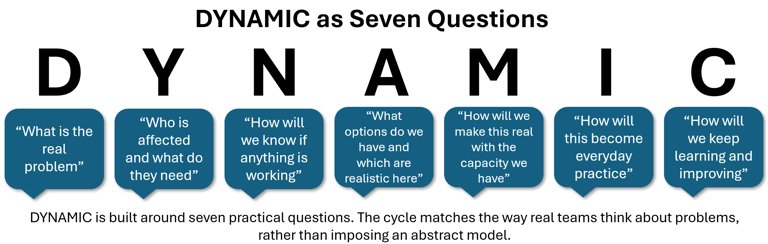
DYNAMIC stands for:
Discover the real problem
Your Customer
Navigate Measures
Assess Solutions
Mobilise Implementation
Integrate Use
Check and Sustain
Unlike traditional methods that assume stable demand, clean data and predictable environments, DYNAMIC is built for live services where demand is emotional, priorities shift and work rarely arrives neatly.
Around DYNAMIC sits the wider Impact360 system, which includes:
A readiness framework to test whether organisations are genuinely capable of delivering what they are about to promise
A change governance approach that right-sizes control based on risk and complexity
A strategic linking method that connects frontline improvement directly to corporate objectives and value for money
A capability pathway that develops internal practitioners rather than creating dependency on consultants
Together, these elements turn strategy into something that can actually be delivered, not just discussed.
How Impact360 Works
Why Impact360 Is Different
Most transformation approaches were built for manufacturing lines, software development or controlled project environments. They assume predictable inputs, stable workflows and the ability to pause work while improvement happens.
Housing and public services do not work like that.
Customers arrive with complex lives, not tidy use cases. Regulation cannot be ignored. Data is often fragmented. Capacity is stretched. And frontline teams cannot stop serving people while a new process is designed.
Impact360 starts from that reality rather than fighting it.
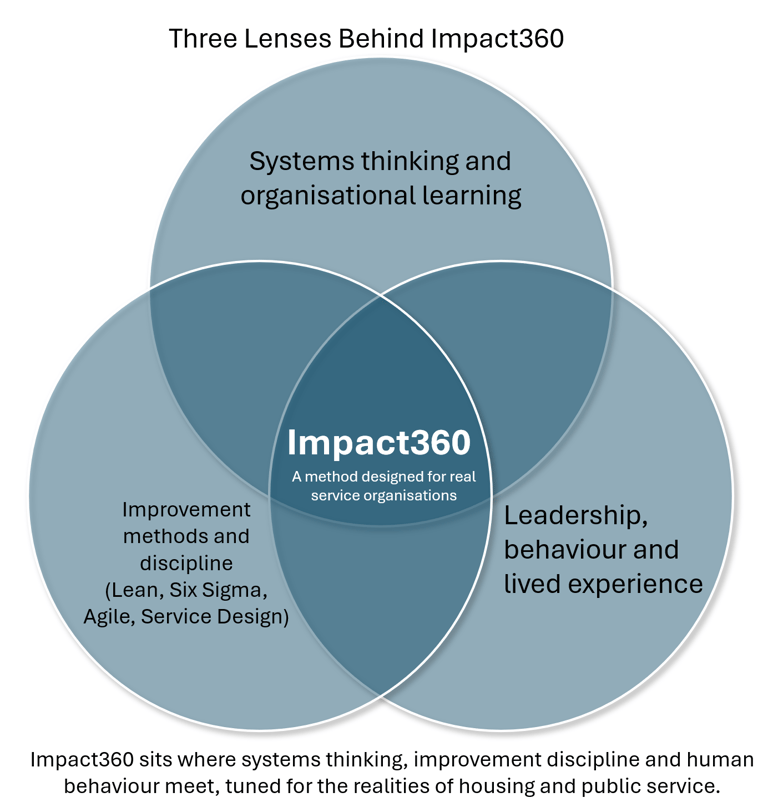
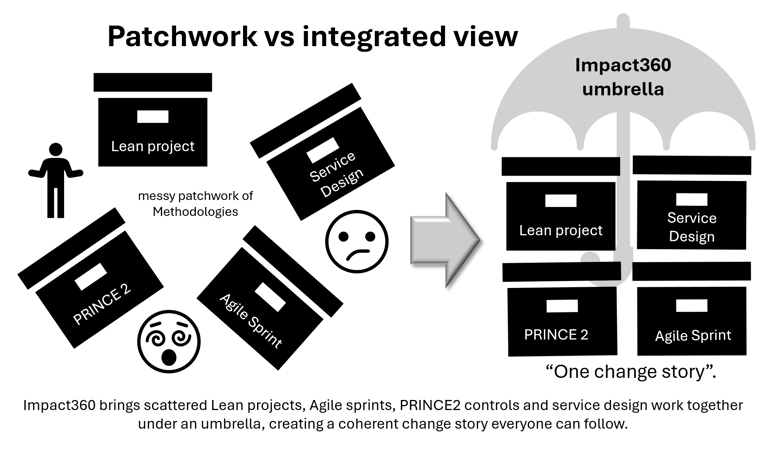
It does not force housing to behave like a factory, nor does it pretend that digital alone will fix broken systems. Instead, it blends the strengths of Lean, Six Sigma, Agile and Service Design, while deliberately leaving behind the parts that do not work in people-centred services.
Most importantly, Impact360 treats people as part of the system, not as a problem to be controlled.
Why Impact360 Is Different
Most transformation approaches were built for manufacturing lines, software development or controlled project environments. They assume predictable inputs, stable workflows and the ability to pause work while improvement happens.
Housing and public services do not work like that.
Customers arrive with complex lives, not tidy use cases. Regulation cannot be ignored. Data is often fragmented. Capacity is stretched. And frontline teams cannot stop serving people while a new process is designed.
Impact360 starts from that reality rather than fighting it.
It does not force housing to behave like a factory, nor does it pretend that digital alone will fix broken systems. Instead, it blends the strengths of Lean, Six Sigma, Agile and Service Design, while deliberately leaving behind the parts that do not work in people-centred services.
Most importantly, Impact360 treats people as part of the system, not as a problem to be controlled.
The Problems Impact360 Solves
Impact360 was designed to solve real, repeated problems, including:
Strategies that look good on paper but never translate into delivery
Change portfolios that are overloaded, reactive and poorly prioritised
Improvement activity that burns people out instead of building capability
Governance that is either too heavy to move or too light to protect delivery
Digital programmes that automate broken processes rather than fixing them
Value for money being treated as a compliance exercise instead of a decision-making discipline
By addressing these issues together, rather than in isolation, Impact360 helps organisations move from constant motion to genuine progress.
Why I Created It
I did not create Impact360 in a classroom or a consultancy slide deck.
I built it through lived experience.
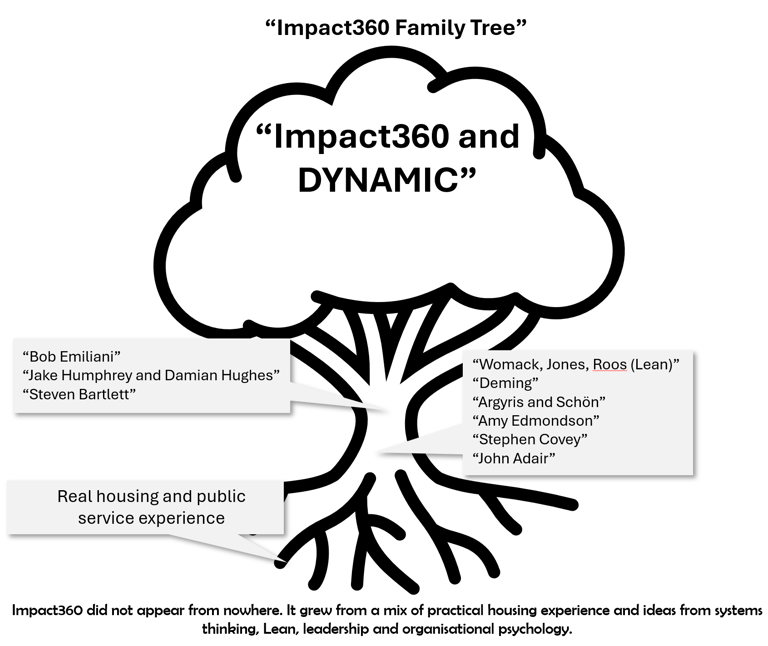
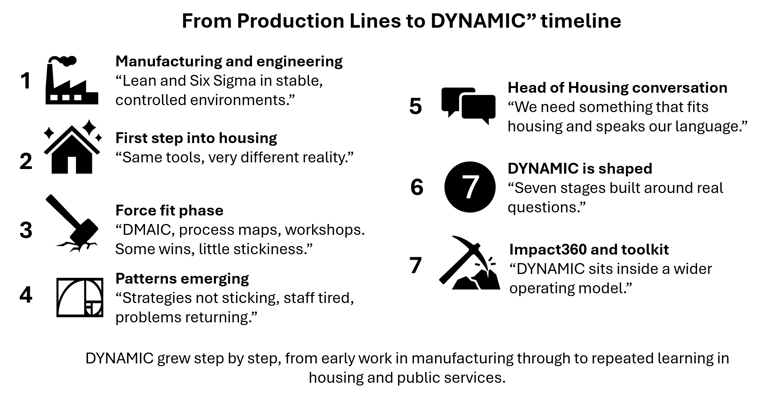
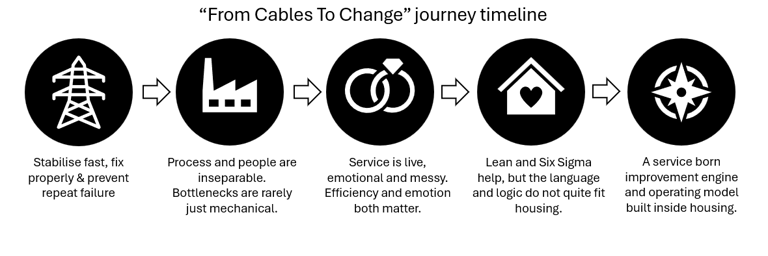
My career began in hands-on engineering, where mistakes had immediate consequences and quick fixes always came back to bite later. I moved through manufacturing, service businesses and eventually into housing and public services, where the complexity increased but the pressure never reduced.
I spent years applying Lean Six Sigma as a Master Black Belt, and while it worked brilliantly in manufacturing, I could see it struggling in service environments. Not because people lacked capability, but because the method was never designed for the emotional, regulated and human reality of housing.
Instead of walking away from those tools, I evolved them.
Every element of Impact360 was built by testing it in real organisations, breaking it when it did not work, and reshaping it until it did. If a tool did not help a frontline team on a Monday morning, it did not survive.
Why I Was the Right Person to Build It
Impact360 sits at the intersection of delivery, leadership and lived experience.
I have worked on the frontline, in operational management, in transformation leadership and at board and executive level. I have seen how strategy sounds in the boardroom and how it feels on the ground. I understand the pressure leaders carry, and I understand the reality teams live with.
That combination matters.
Impact360 was not created to impress.
It was created to work.
It reflects years of learning what helps organisations change sustainably, what damages trust, and what actually builds confidence and capability over time.
What Impact360 Ultimately Stands For
Impact360 is about making change work, not just managing it.
It is about teaching organisations to improve themselves, rather than relying on repeated interventions.
It is about connecting purpose, performance and people in a way that lasts.
And above all, it is about respecting the reality of service work while still demanding better outcomes for customers, staff and communities.
If that resonates, Impact360 was built for you.
Phone
Skelton.dave2@gmail.com
+44 7713 480988
© 2025. All rights reserved.